Jul 29, 2026Materials, Quality & Compliance
Bamboo vs. Acacia vs. Beech Wood: How B2B Buyers Choose the Right Material
A practical comparison of bamboo, acacia wood and beech wood for kitchenware and homeware buyers, covering appearance, durability, pricing, applications and sourcing considerations.
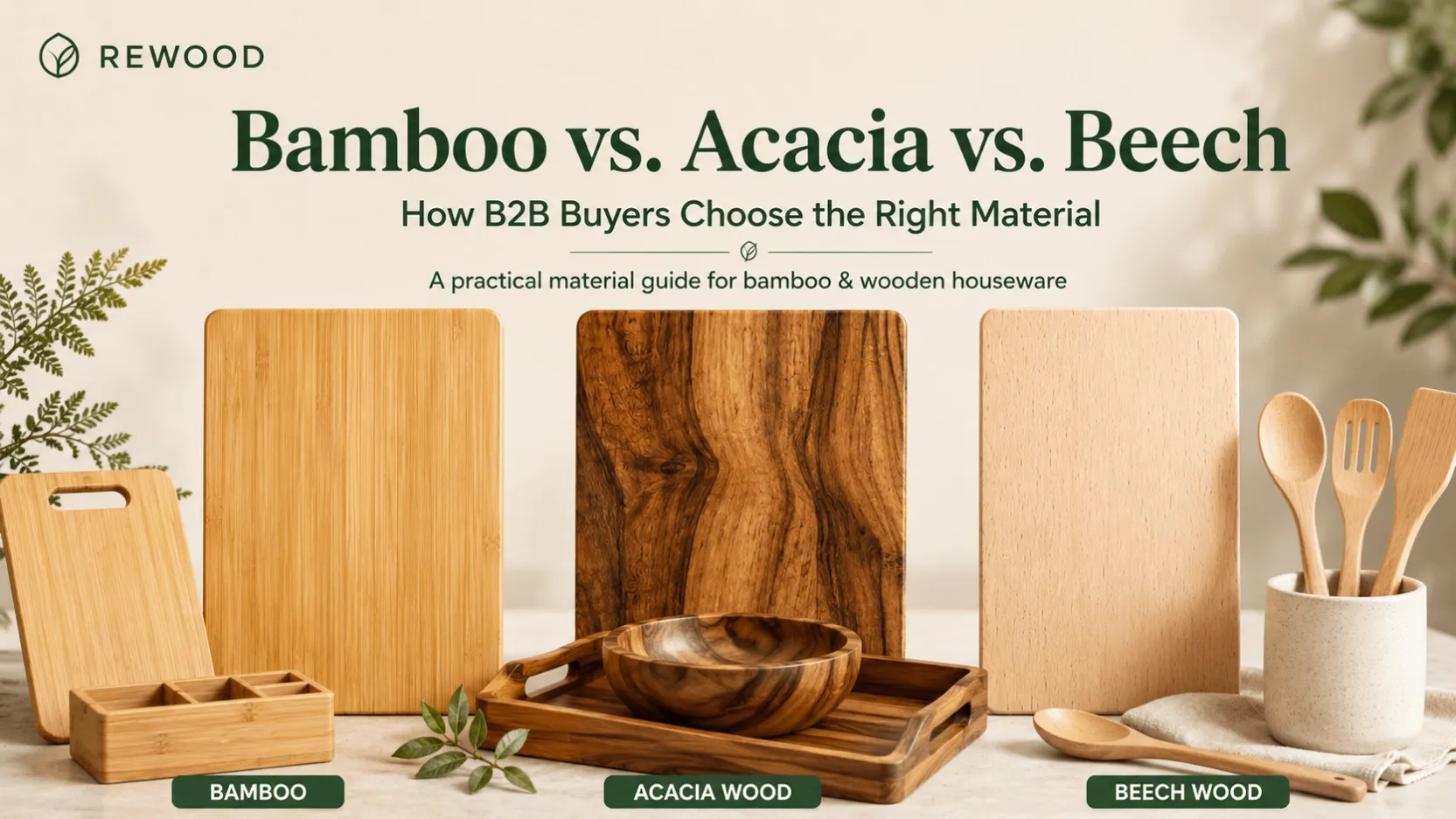
Choosing the right material is one of the most important decisions when developing bamboo and wooden houseware products.
For importers, distributors and private-label brands, material selection affects not only the appearance of the final product, but also durability, pricing, customer perception and market positioning.
Different materials create different product experiences.
A premium serving tray, an everyday kitchen utensil set and a space-saving organizer may require completely different material choices.
At Rewood, we work with various natural materials based on product function, target market and brand requirements, including bamboo, acacia wood and beech wood.
There is no single “best” material.
The right material depends on the product category, customer expectations and business goals.
Common Material Misunderstandings in Houseware Sourcing
When sourcing wooden kitchenware and home products, buyers may sometimes see different material names used for similar-looking products.
For example, some wooden utensils and kitchen tools are marketed as “teak style” or “teak color” because of their appearance, while the actual material may be acacia wood or another hardwood.
For professional sourcing, buyers should always confirm:
- Actual wood species;
- Material specification;
- Moisture control process;
- Surface finishing method;
- Food-contact requirements;
- Production capability of the supplier.
At Rewood, we help customers select suitable materials according to product application, market positioning and target price.
1. Bamboo: Sustainable and Versatile
Bamboo has become one of the most popular materials for modern kitchen and home organization products.
Although commonly grouped with wooden products, bamboo is technically a fast-growing grass. Its renewable characteristics and clean appearance make it attractive for brands focusing on sustainable homeware.
Key Advantages of Bamboo
- Fast-growing renewable material;
- Light natural appearance;
- Clean and modern visual style;
- Good strength-to-weight ratio;
- Suitable for large product collections;
- Easy to customize with laser engraving and private-label packaging.
Common Bamboo Products
Bamboo is widely used for:
- Cutting boards;
- Drawer organizers;
- Kitchen utensils;
- Storage boxes;
- Bathroom organizers;
- Desk organizers.
Material Characteristics
Bamboo offers good moisture resistance when properly finished and maintained.
For products exposed to daily kitchen use, proper surface treatment, moisture control and production quality are important factors that influence product performance.
Suitable Brand Positioning
Bamboo is especially suitable for:
- Eco-conscious brands;
- Sustainable homeware collections;
- Modern minimalist designs;
- Everyday household products.
For buyers developing a wider product range, bamboo provides a good balance between appearance, performance and cost.
2. Acacia Wood: Premium Appearance and Natural Grain
Acacia wood is widely used for premium wooden kitchenware and serving products.
One of the biggest advantages of acacia is its unique natural grain pattern. The color variation and wood texture create a handcrafted appearance that many premium brands prefer.
Key Advantages of Acacia Wood
- Rich natural grain patterns;
- Premium visual appeal;
- Strong hardwood characteristics;
- High durability with proper finishing;
- Creates higher perceived product value.
Common Acacia Wood Products
Acacia is commonly used for:
- Serving trays;
- Cutting boards;
- Salad bowls;
- Wooden kitchen accessories;
- Serving collections.
Material Characteristics
Compared with lighter materials, acacia provides a warmer and more luxurious appearance.
Because every piece can have natural grain variation, acacia products often have a more unique handmade feeling.
Suitable Brand Positioning
Acacia wood works well for:
- Premium kitchen brands;
- Natural lifestyle collections;
- Rustic homeware designs;
- Gift sets;
- Higher perceived-value products.
For brands looking to create products with stronger natural wood character, acacia is often a preferred choice.
3. Beech Wood: Classic European Hardwood Choice
Beech wood has been widely used in European household products for many years.
It has a smooth texture, light color and consistent appearance, making it suitable for functional products requiring reliable machining and stable quality.
Key Advantages of Beech Wood
- Smooth and fine texture;
- Light natural color;
- Stable and consistent appearance;
- Easy processing for different product designs;
- Suitable for functional household products.
Common Beech Wood Products
Beech is commonly used for:
- Wooden spoons;
- Kitchen utensils;
- Brushes;
- Wooden hangers;
- Household tools.
Material Characteristics
Beech provides a classic European appearance and works well for products where consistency, functionality and production efficiency are important.
Suitable Brand Positioning
Beech wood is suitable for:
- European-style homeware brands;
- Functional household products;
- High-volume production;
- Products requiring consistent appearance.
Material Comparison for B2B Buyers
Factor | Bamboo | Acacia Wood | Beech Wood |
|---|---|---|---|
Appearance | Clean natural color with straight grain | Rich grain patterns with premium character | Smooth texture with consistent light color |
Product Position | Eco-friendly and modern | Premium and natural lifestyle | Functional and classic European style |
Cost Level | Medium | Medium to high | Low to medium |
Best For | Organizers, kitchenware, storage products | Serving products, premium collections | Utensils, hangers, household tools |
Moisture Performance | Good with proper finishing | Good with proper finishing | Requires suitable finishing and care |
Sustainability | Renewable bamboo material | FSC-certified options available | FSC-certified options available |
How Should Buyers Choose the Right Material?
When selecting materials for a new product line, buyers should consider several factors.
1. Target Market Positioning
Different materials communicate different brand values.
Bamboo is often associated with sustainability and modern design.
Acacia wood creates a premium natural appearance.
Beech wood represents classic European functionality.
The best material choice depends on the customer group and retail positioning.
2. Product Application
Different products require different material characteristics.
For example:
Drawer organizers
→ Bamboo is commonly preferred because of its clean appearance and lightweight structure.
Serving trays and premium kitchen collections
→ Acacia wood provides a stronger natural wood feeling.
Wooden utensils and functional tools
→ Bamboo or beech wood are commonly selected depending on design requirements.
Wooden hangers
→ Beech wood is widely used because of its stable structure and smooth finish.
3. Cost and Retail Positioning
Material selection directly affects:
- Production cost;
- Retail positioning;
- Customer perception;
- Product competitiveness.
A reliable supplier should help buyers balance:
- Appearance;
- Performance;
- Target price;
- Production feasibility.
Rewood Material Selection Support
At Rewood, we support importers, distributors and private-label brands with material selection and product development for bamboo and wooden houseware.
Our team evaluates materials based on:
- Product function;
- Target market;
- Brand positioning;
- Expected retail price;
- Manufacturing requirements;
- Packaging and export considerations.
We support projects from material selection and product development to:
- OEM/ODM development;
- Custom logo application;
- Private-label packaging;
- Quality inspection;
- Export preparation.
Explore our bamboo and wooden kitchenware collections to see examples of different material applications.
Learn more about our OEM/ODM private label services for customized bamboo and wooden houseware projects.
Developing a Bamboo or Wooden Houseware Collection?
If you are planning a new product range, send us:
- Product photos or drawings;
- Target quantities;
- Material requirements;
- Logo and packaging requirements;
- Destination market.
Our team can help recommend the most suitable material and manufacturing approach for your project.
About the Author
Written by Jessie Jiang
Overseas Business Development, Rewood Houseware
Jessie works with importers, distributors and private-label brands on bamboo and wood houseware manufacturing, OEM/ODM product development, sourcing coordination, custom packaging and export projects.
Reviewed by the Rewood Product Development & Quality Control Team
This article is based on Rewood’s experience in bamboo and wooden houseware development, material selection and export projects.
Last updated: July 29, 2026