
Aug 14, 2026Product Development & Case Studies
Behind a B2B Houseware Shipment: How Rewood Coordinates Export Dispatch from Yiwu
A real Rewood shipment case showing how export cartons are staged, palletized, stretch-wrapped and loaded from our Yiwu office, and how professional B2B houseware orders are prepared for logistics han
For importers, distributors, retailers and private-label homeware brands, an order is not finished when production is completed.
The final shipment stage—including carton identification, pallet supply, palletizing, load stabilization, outbound staging and logistics handover—also affects whether an order leaves China in an organized and controlled condition.
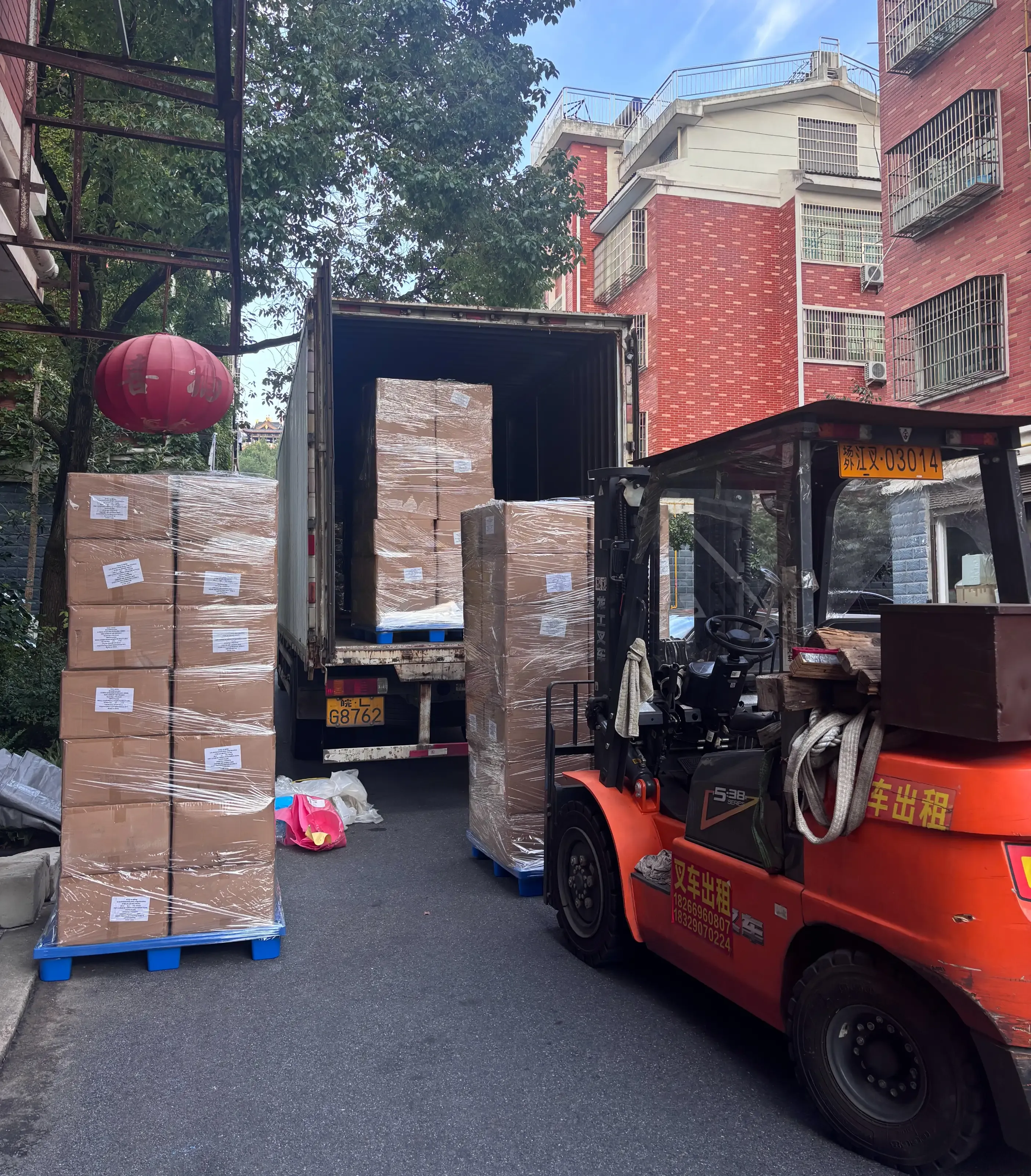
The photographs in this case show a real outbound shipment handled through Rewood’s Yiwu office. Export cartons were grouped on pallets, secured with stretch film, staged before dispatch and moved by forklift for outbound loading.
For projects that require it, Rewood can also provide pallets and arrange palletizing as part of shipment preparation.
The exact pallet, packing and loading solution depends on the product, carton configuration, order quantity, shipping method and destination requirements.
Customer identity, destination, individual product details, shipment quantity and commercial terms are not disclosed in this case.
The purpose of this article is to show an often-overlooked part of professional B2B houseware sourcing: what happens between completed production and final logistics handover.
Quick Answer: What Happens Before a B2B Houseware Shipment Leaves Yiwu?
Depending on the project, final shipment preparation may include:
- Confirming the cartons included in the shipment
- Checking SKU, carton and shipment identification
- Reviewing visible export-carton condition
- Grouping cartons by order, SKU or shipment requirement
- Providing pallets when required
- Arranging cartons onto pallets
- Applying stretch wrapping or other suitable stabilization
- Confirming pallet and shipment labels
- Staging goods for logistics pickup
- Moving palletized goods with suitable handling equipment
- Loading the outbound vehicle
- Completing logistics handover
Not every shipment requires exactly the same process.
However, professional buyers should pay attention to this stage because correctly manufactured products can still create receiving problems if cartons are mixed, damaged, mislabeled or poorly organized during dispatch.
What This Real Shipment Shows
This outbound shipment was prepared through Rewood’s Yiwu office.
The photographs visibly show:
- Export cartons grouped on pallets
- Palletized carton loads
- Clear stretch wrapping around grouped cartons
- Individual shipment labels attached to cartons
- Multiple pallet groups staged before loading
- Forklift handling
- Outbound vehicle loading
- Physical shipment handover preparation
These photographs represent the shipment and logistics preparation stage, not the manufacturing stage.
That distinction is important.
Production quality determines whether the product meets the approved specification.
Shipment preparation helps ensure that the completed goods, cartons, labels and logistics information are organized correctly before they move into the next stage of the supply chain.
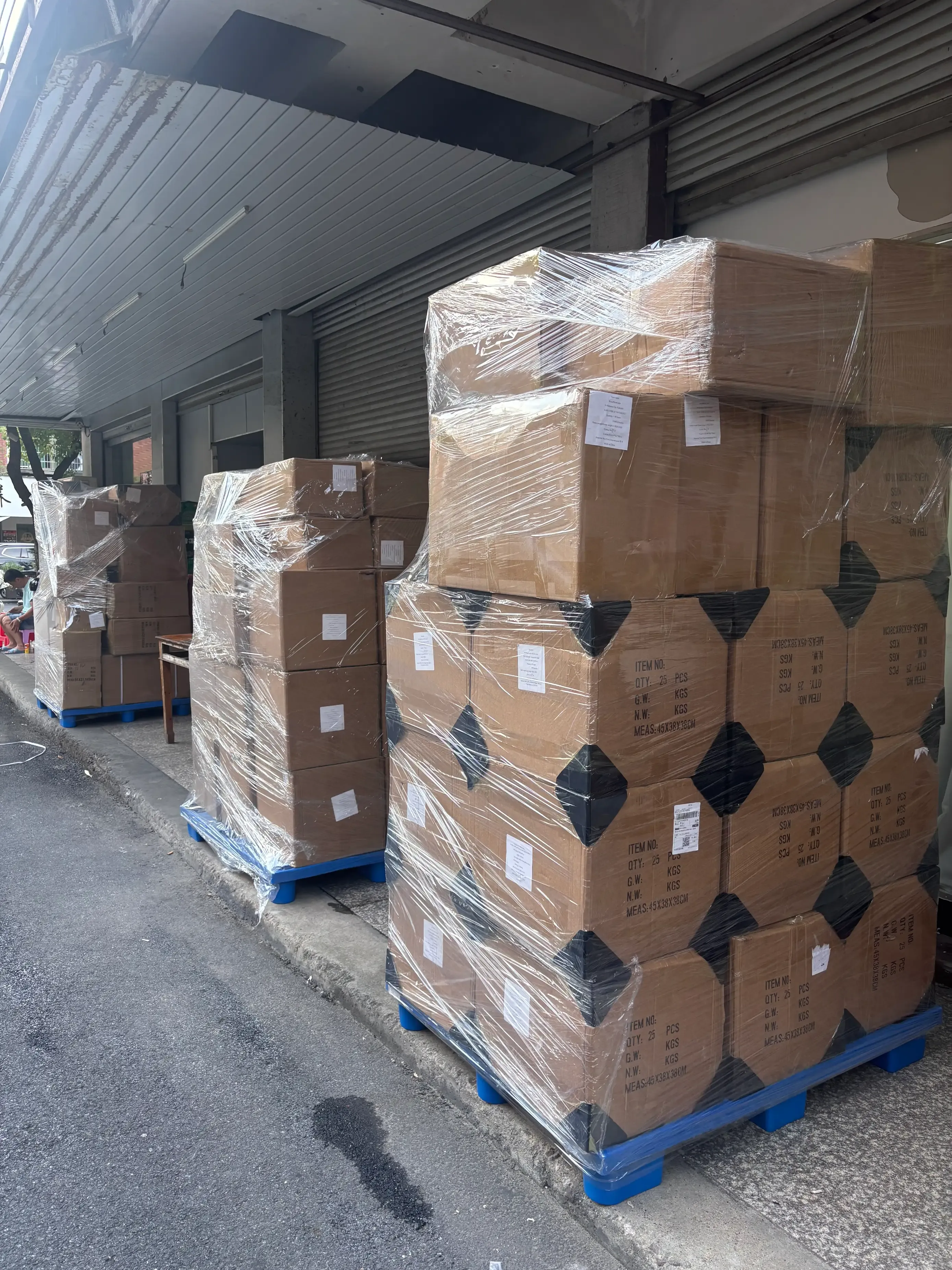
Export cartons grouped on pallets and protected for handling before outbound loading.
1. Why Rewood Uses Yiwu as an Export Coordination Point
Rewood’s bamboo and wood manufacturing operations and our Yiwu office perform different functions.
A shipment leaving from Yiwu does not mean that every product in the shipment was manufactured in Yiwu.
Our core business focuses on bamboo and wooden houseware manufacturing and product development.
For selected complementary home-and-living categories or mixed-material projects, production may also be coordinated through qualified partner factories.
Depending on the project, our Yiwu team can support activities such as:
- Buyer communication
- Order coordination
- Packaging coordination
- Logo and artwork confirmation
- Barcode and label preparation
- Shipping marks
- Multi-SKU coordination
- Shipment grouping
- Pallet supply
- Palletizing
- Shipment preparation
- Logistics coordination
- Outbound handover
For professional buyers, this operating structure should remain transparent.
The important question is not whether every SKU comes from exactly the same building.
The more important questions are:
- Who controls the approved specification?
- Who follows the order?
- Who communicates revisions?
- Who confirms packaging?
- Who coordinates labels and carton marks?
- Who follows QC requirements?
- Who prepares the goods for shipment?
- Who communicates with the buyer when a problem occurs?
Clear responsibility across these stages is essential for a professional sourcing relationship.
2. Confirm the Shipment Before Goods Are Released
Before cartons move into outbound logistics, each shipment should be clearly identified.
Depending on the order, shipment information may include:
- Customer or project reference
- Purchase order reference
- SKU
- Item number
- Product description
- Number of cartons
- Quantity per carton
- Packaging version
- Shipping marks
- Barcode requirements
- Product labels
- Logistics labels
- Destination information
- Special handling instructions
For a simple single-SKU order, shipment identification may be relatively straightforward.
For a larger homeware program involving several products, multiple packaging versions or goods from different production sources, accurate identification becomes increasingly important.
A small mistake at this stage can create problems such as:
- Incorrect cartons being shipped
- Different SKUs being mixed
- Wrong labels being applied
- Warehouse receiving discrepancies
- Extra manual checking at destination
- Delays during fulfillment or distribution
This is why shipment control should begin before the truck arrives.
3. Export Carton Condition Should Be Checked Before Loading
Retail packaging and export packaging perform different functions.
The retail package protects and presents the individual product.
The export carton must protect multiple units through warehouse handling, loading and transportation.
Before dispatch, visible carton condition should be checked for obvious problems such as:
- Crushed cartons
- Torn corrugated board
- Open seams
- Loose sealing tape
- Major dents
- Damaged corners
- Water exposure
- Deformed cartons
- Missing labels
- Incorrect shipment marks
This is not a replacement for product inspection.
It is an additional shipment-stage check focused on the condition of the shipping package before logistics handover.
For bamboo, wooden and other relatively heavy homeware products, export-carton structure can be particularly important because poorly matched cartons may deform during stacking and transportation.
4. Rewood Can Provide Pallets for Suitable Shipments
For projects that require palletized shipment preparation, Rewood can provide pallets according to the agreed logistics arrangement.
Pallets are not automatically required for every order.
Whether they should be used depends on factors such as:
- Product type
- Carton size
- Shipment quantity
- Total weight
- Freight method
- Warehouse handling requirements
- Delivery method
- Destination requirements
- Buyer instructions
For suitable projects, pallet support may include:
- Pallet supply
- Carton grouping
- Arrangement of cartons onto pallets
- Stretch wrapping
- Load stabilization
- Pallet identification
- Shipment staging
- Forklift handling
- Logistics pickup preparation
This provides professional buyers with another option when their warehouse or transportation plan requires palletized goods.
5. Why Palletizing Can Be Useful for B2B Houseware Shipments
Palletizing can simplify the handling of larger groups of cartons.
Potential benefits include:
- Reducing repeated handling of individual cartons
- Keeping selected carton groups together
- Supporting forklift movement
- Improving loading organization
- Making shipment groups easier to identify
- Reducing the chance of individual cartons becoming separated during local handling
- Supporting warehouse receiving processes where pallets are preferred
However, palletization also affects logistics planning.
Buyers should consider:
- Pallet dimensions
- Number of pallets
- Cartons per pallet
- Loaded pallet height
- Gross pallet weight
- Total shipment volume
- Loading-space utilization
- Freight calculation
- Destination warehouse requirements
For this reason, Rewood treats palletizing as a project-specific logistics service, not a mandatory solution for every export order.
6. Stretch Wrapping Helps Stabilize Palletized Loads
The palletized goods in these photographs are secured with clear stretch film.
Stretch wrapping can help:
- Keep cartons grouped together
- Reduce carton movement during handling
- Stabilize palletized loads
- Protect cartons from dust during local handling
- Support forklift and warehouse movement
However, an important distinction should be made:
Stretch wrapping does not replace appropriate product packaging or a suitable export carton.
A complete packaging system still needs to consider:
- Product protection
- Individual or retail packaging
- Export carton strength
- Carton arrangement
- Pallet requirements where applicable
- Load stabilization
- Logistics handling
Stretch wrap is therefore an additional shipment-preparation measure rather than the primary product packaging.
7. Pallet Configuration Should Be Confirmed Before Shipment
For palletized shipments, buyers should confirm the logistics configuration in advance.
Important information may include:
- Required pallet dimensions
- Pallet type
- Cartons per pallet
- Maximum loaded height
- Maximum pallet weight
- Number of pallets
- Stretch-wrapping requirements
- Additional stabilization requirements
- Pallet labels
- Destination warehouse restrictions
Different logistics routes and receiving warehouses may have different requirements.
For this reason, the pallet configuration should be matched to the actual shipping plan rather than decided only according to what is convenient during warehouse handling.
8. Shipping Marks and Labels Must Match the Order
Correct physical products can still create receiving problems if the identification on the cartons is wrong.
Depending on the project, shipment information may include:
- Customer reference
- Purchase order number
- SKU
- Item number
- Product description
- Quantity
- Gross weight
- Net weight
- Carton dimensions
- Shipping marks
- Barcode
- Retailer labels
- FBA labels where applicable
- Destination information
Not every project requires every item listed above.
The important principle is that the labeling system must match the buyer’s actual warehouse, fulfillment and logistics requirements.
For importers handling multiple SKUs, clear carton and pallet identification also makes receiving and inventory checking easier.
9. Shipment Grouping Becomes More Important for Multi-SKU Orders
Many established houseware buyers eventually source more than one product.
A program may include:
- Bamboo kitchenware
- Wooden utensils
- Cutting boards
- Storage products
- Bathroom accessories
- Office organization
- Home organization
- Outdoor items
- Mixed-material products
- Complementary home-and-living categories
These products may have:
- Different carton sizes
- Different quantities
- Different packaging
- Different labels
- Different production schedules
- Different manufacturing locations
This makes shipment coordination more important.
For palletized multi-SKU shipments, carton groups may need to remain clearly separated or identified according to:
- SKU
- Purchase order
- Product category
- Packaging version
- Customer reference
- Destination
Professional sourcing therefore involves more than:
Factory → Customer
A complete order may involve:
Specification → Sampling → Production → QC → Packaging → Labeling → Carton Control → Palletizing → Shipment Preparation → Logistics Handover
10. Final Loading Is Part of Shipment Control
The second photograph shows palletized cartons being handled by forklift during outbound loading.
At this point, the goods are moving from shipment staging into the logistics chain.
Before the vehicle departs, relevant checks may include:
- Are the correct pallets being loaded?
- Are the correct cartons included?
- Is the expected shipment group complete?
- Are pallet and carton labels readable?
- Are visible carton problems being addressed?
- Are palletized loads sufficiently stable?
- Are special logistics instructions understood?
- Has the logistics provider received the correct shipment information?
The specific process depends on the order.
The goal is not to create unnecessary procedures.
The goal is to reduce avoidable errors at the point where the goods leave the coordination location.
11. Pallet Supply Is Part of a Broader Export-Ready Packaging Service
For professional buyers, palletizing should not be considered in isolation.
It forms part of a broader packaging and logistics preparation system.
Depending on the project, Rewood can support:
- Individual product packaging
- Kraft boxes
- Color boxes
- Mail-order packaging
- Protective inserts
- Instruction manuals
- Insert cards
- Hang tags
- Barcode labels
- FNSKU labels where applicable
- Shipping marks
- Export cartons
- Carton identification
- Pallet supply
- Palletizing
- Stretch wrapping
- Shipment grouping
- Logistics preparation
The final solution depends on the product structure, sales channel, quantity and shipping method.
For example, an Amazon-oriented order may have different labeling and carton requirements from a traditional distributor shipment.
A retail chain may also provide its own packaging, pallet or warehouse specifications.
The packaging and logistics plan should therefore be confirmed as part of the project rather than treated as an afterthought.
12. Export Readiness Begins Long Before Loading Day
A well-organized shipment depends on decisions made during earlier project stages.
During RFQ
The buyer should clarify:
- Product
- Material
- Dimensions
- Estimated quantity
- Number of SKUs
- Target market
- Packaging preference
- Destination
During Sampling
The project should progressively confirm:
- Product structure
- Material
- Finish
- Logo
- Packaging
- Labels
- Product configuration
Before Mass Production
The approved product and packaging version should be clear.
During Production
Product status, packaging and major QC requirements should be followed.
Before Shipment
The project should confirm:
- Final shipment quantity
- Carton information
- Labels
- Shipping marks
- Pallet requirement
- Pallet configuration
- Logistics arrangement
- Pickup information
Experienced suppliers therefore do not begin thinking about shipment only when the truck arrives.
Buyer Checklist Before a Houseware Shipment Leaves China
Shipment Area | What the Buyer Should Confirm |
|---|---|
Product | Correct SKU and approved product version |
Quantity | Agreed shipment quantity |
Packaging | Correct individual and export packaging |
Export Cartons | Correct configuration and suitable visible condition |
Labels | Correct SKU, barcode or retailer labels where required |
Shipping Marks | Correct customer and logistics information |
Pallet Supply | Whether pallets are required for this shipment |
Palletizing | Carton arrangement and pallet configuration |
Stabilization | Stretch wrapping or other suitable handling protection |
Shipment Grouping | How multiple SKUs or orders are separated |
Logistics | Pickup method, destination and transport arrangement |
Handover | Responsibilities at the shipment handover stage |
For professional buyers comparing suppliers, this part of the order deserves attention.
A lower product price may not create a lower total sourcing cost if packaging, labeling, shipment preparation or logistics coordination are poorly controlled.
13. Manufacturing and Sourcing Responsibilities Should Remain Transparent
Rewood’s core focus is bamboo and wooden houseware manufacturing and product development.
For selected complementary categories or mixed-material projects, we may also coordinate production through partner factories.
When partner factories are involved, we do not believe every item needs to be presented as if it came from the same production line.
Professional buyers should instead understand:
- Where the product is made
- What specification has been approved
- Who coordinates the project
- Who communicates revisions
- Who confirms packaging
- Who follows quality requirements
- Who coordinates shipment preparation
This is especially important for multi-SKU houseware sourcing.
A supplier’s value is not only the physical manufacturing process.
It also includes the ability to connect product development, production, packaging, quality control and shipment preparation into one workable B2B process.
14. What a Shipment Photograph Can—and Cannot—Prove
Real shipment photographs provide useful evidence because they show physical goods reaching an actual outbound logistics stage.
The photographs in this article can visually support:
- Physical export cartons
- Palletized loads
- Stretch wrapping
- Shipment staging
- Forklift handling
- Outbound loading activity
However, a shipment photograph alone does not prove:
- Exact order quantity
- Product specifications
- Product inspection results
- Product certification
- Customer identity
- Destination market
- Manufacturing origin of every item
- Compliance documentation
Those points require separate project records and documentation.
Professional supplier evaluation should combine physical evidence with:
- Approved specifications
- Samples
- Packaging information
- Quality-control records
- Commercial documentation
- Clear communication
This is more useful than relying on marketing claims alone.
How Rewood Supports Export-Ready Houseware Projects
Rewood supports importers, distributors, wholesalers, retailers, private-label brands and selected e-commerce sellers with bamboo, wooden and related home-and-living products.
Depending on the project, our support may include:
- OEM/ODM product development
- Product specification coordination
- Sample development
- Custom branding
- Private-label packaging
- Barcode and label coordination
- FNSKU labeling where required
- Production follow-up
- Quality-control coordination
- Export-carton preparation
- Shipping marks
- Multi-SKU coordination
- Pallet supply
- Palletizing
- Stretch wrapping and load stabilization
- Shipment grouping
- Shipment preparation
- Logistics coordination
- Outbound handover support
The final requirements are confirmed according to the product, order quantity, packaging, target market and delivery plan.
What Information Should Buyers Provide for a New Project?
For an initial evaluation, please provide:
- Product name or reference image
- Product dimensions
- Preferred material
- Estimated quantity
- Number of SKUs
- Target market
- Logo requirements
- Packaging requirements
- Barcode or labeling requirements
- Pallet requirements if known
- Delivery country or destination
- Expected timeline
Not every detail needs to be finalized before the first discussion.
However, clearer project information allows the manufacturing, packaging and logistics requirements to be evaluated more accurately.
Frequently Asked Questions
Can Rewood provide pallets for export shipments?
Yes. For suitable projects, Rewood can provide pallets and arrange palletizing according to the shipment and logistics requirements. Pallet specifications should be confirmed according to the actual project.
Is palletizing required for every order?
No. Palletization depends on the product, carton configuration, shipment volume, freight method, warehouse requirements and buyer instructions.
Can Rewood arrange stretch wrapping for palletized cartons?
Yes. Stretch wrapping and suitable load stabilization can be arranged for palletized shipments when required.
Does stretch wrapping replace an export carton?
No. Stretch wrapping is an additional logistics-handling measure. Products still require appropriate internal packaging and suitable export cartons.
Can cartons be grouped by SKU before palletizing?
Yes. For multi-SKU projects, carton and pallet grouping can be coordinated according to SKU, order reference or other agreed shipment requirements.
Is Rewood’s Yiwu office the bamboo and wood factory?
No. Rewood’s bamboo and wood manufacturing base and its Yiwu commercial operations perform different functions. The manufacturing location depends on the actual product and project.
Does a shipment leaving Yiwu mean that the product was manufactured in Yiwu?
No. Shipment location and manufacturing location are not necessarily the same. Goods may be produced at Rewood’s bamboo and wood manufacturing base or, for selected complementary categories, through partner factories before shipment coordination.
Can Rewood coordinate multi-SKU houseware shipments?
Multi-SKU projects can be evaluated according to the products, quantities, manufacturing sources, packaging, labeling and delivery requirements.
Can Rewood arrange custom shipping marks and labels?
Yes. Shipping marks, product labels, barcodes and other shipment-identification requirements can be coordinated according to the specific order.
Can pallets affect shipping cost?
Yes. Pallets can affect shipment dimensions, weight and space utilization. Pallet configuration should therefore be considered together with the chosen logistics method.
Discuss Your Next Houseware Project with Rewood
A successful B2B order involves more than making the product.
From specification and sampling to packaging, QC, palletizing and final shipment preparation, every stage should connect correctly to the next.
If your project involves bamboo or wooden houseware, multi-SKU sourcing, private-label packaging or export-ready shipment preparation, send us your product reference, estimated quantity, target market, packaging requirements and delivery destination.
About the Author
Written by Jessie Jiang
Overseas Business Development, Rewood Houseware
Jessie works with importers, distributors, retailers and private-label brands on bamboo and wooden houseware manufacturing, OEM/ODM development, sourcing coordination, private-label packaging, order management and export projects.
Reviewed by the Rewood Export & Project Coordination Team
This article is based on a real outbound shipment handled through Rewood’s Yiwu office and Rewood’s practical experience supporting B2B houseware production, packaging, palletizing and shipment preparation.
Last updated: August 14, 2026