Aug 17, 2026B2B Buying & Sourcing Guides
How to Start a Private Label Bamboo & Wood Houseware Brand: A Practical Guide for First-Time Buyers
A practical first-order guide for new private-label buyers covering product selection, MOQ, samples, packaging, landed cost and how to start a bamboo or wood houseware project.
Starting a private-label homeware brand can feel complicated when it is your first time sourcing from a manufacturer.
You may have a product idea but no technical drawing.
You may know what you want to sell but not know the correct MOQ.
You may have a logo but no packaging design.
Or you may be building your first Amazon, Shopify, independent e-commerce or retail project and are unsure what information a supplier actually needs before giving you a quotation.
The good news is that you do not need to have every detail finalized before starting a conversation with a manufacturer.
For a first evaluation, a clear product direction, estimated quantity, target market and basic branding requirements are often enough to begin discussing feasibility.
This guide explains how first-time B2B buyers can move from a product idea to a practical private-label bamboo or wooden houseware project without trying to solve every sourcing question at once.
Quick Answer: What Do You Need to Start a Private Label Houseware Project?
For an initial discussion with a supplier, try to prepare these seven pieces of information:
- Product idea or reference
- Estimated first-order quantity
- Target market
- Sales channel
- Logo requirement
- Packaging preference
- Delivery country or destination
You do not need a complete engineering file for every project.
A first inquiry might be as simple as:
- “We want a bamboo drawer organizer similar to this reference.”
- “Our first market is Germany.”
- “We expect to test 300–500 pieces.”
- “We need our logo and retail packaging.”
- “The product will be sold online.”
- “Delivery will be to Germany.”
That already gives the supplier much more useful information than simply asking:
“What is your best price?”
1. Start With a Product Direction, Not a Perfect Specification
Many new buyers delay contacting manufacturers because they think they need a complete technical specification first.
That is not always necessary.
A project can often begin with:
- A reference product
- A competitor link
- A product photograph
- A simple sketch
- A current product you want to improve
- A list of desired functions
- An idea for a new material, size or packaging direction
The goal of the first discussion is not to finalize the complete mass-production specification.
The goal is to determine:
- Is the product suitable for manufacturing?
- What material is appropriate?
- What level of customization is required?
- What information is still missing?
- What should be confirmed during sampling?
- What quantity range should be evaluated?
For a first-time buyer, this approach is usually more practical than trying to create a complete factory specification without manufacturing experience.
2. Choose a Product That Makes Sense for Your First Launch
One of the most important first decisions is not simply:
“What product looks attractive?”
A better question is:
“What product can I clearly position, package, price and explain to my target customer?”
For bamboo and wooden houseware, new brands may evaluate categories such as:
- Cutting boards
- Wooden or bamboo utensil sets
- Drawer organizers
- Desktop organizers
- Storage boxes
- Serving trays
- Bathroom organizers
- Small kitchen accessories
This does not mean these products are guaranteed to sell.
The right first product depends on your market, competition, target price and brand concept.
A useful first-launch product usually has several characteristics:
- Clear function
- Easy-to-understand customer benefit
- Manageable packaging
- Suitable branding area
- Reasonable differentiation options
- A retail price that can support the total landed cost
- Potential for related products later
For example, a brand starting with one bamboo storage product may eventually expand into a coordinated home-organization collection.
The first product should therefore be considered both as a sales item and as a possible starting point for a wider product range.
3. Decide Who You Are Selling To Before Finalizing the Product
Your target customer affects many sourcing decisions.
A product intended for Amazon may require different packaging and labeling from a product sold through a boutique retail store.
A premium homeware brand may prioritize material appearance and packaging presentation.
A value-oriented online brand may focus more heavily on shipping efficiency and retail price.
Before requesting a quotation, define the basic sales context:
- Target country
- Target customer
- Sales channel
- Expected retail price range
- Brand positioning
- Main competitors
- Whether the product is intended as a single SKU or part of a collection
This information helps a supplier understand why certain product or packaging decisions matter.
For example:
Amazon / E-commerce
May place more emphasis on:
- Packaging protection
- Barcode requirements
- FNSKU where applicable
- Mail-order suitability
- Carton efficiency
Retail Stores
May place more emphasis on:
- Shelf presentation
- Color box design
- Hang tags
- Product information
- Retail packaging appearance
Premium Private Label
May place more emphasis on:
- Material selection
- Finish
- Branding details
- Gift-ready packaging
- Visual consistency
There is no universal packaging or product specification that is ideal for every sales channel.
4. Understand the Difference Between Product MOQ and Packaging MOQ
This is one of the most common areas of confusion for first-time buyers.
Product MOQ and custom packaging MOQ are not always the same.
For example, a manufacturer may be able to produce a relatively small product trial quantity, while a fully customized printed box may require a different minimum quantity from the packaging supplier.
The same may apply to:
- Custom boxes
- Printed sleeves
- Special inserts
- Molded packaging components
- Printed manuals
- Custom accessories
This is why a buyer should ask separately:
- What is the MOQ for the product?
- What is the MOQ for the custom logo?
- What is the MOQ for custom packaging?
- Are there simpler packaging options for a first order?
For an early market test, it may sometimes make more sense to begin with:
- Standard product
- Custom logo
- Kraft box
- Sticker label
- Barcode
- Simple insert card
rather than immediately developing the most complex retail package.
Packaging can become more sophisticated as the product and sales volume become more established.
5. Private Label Does Not Mean You Need to Invent a Completely New Product
Many first-time buyers assume that “private label” means they must design an entirely new product from zero.
That is not necessarily true.
Private-label development can exist at several levels.
Level 1: Existing Product + Your Logo
The simplest option may involve selecting an existing product and adding your brand.
This can be useful when the objective is to test a market with relatively limited product development.
Level 2: Product + Logo + Custom Packaging
The product structure remains largely unchanged, but the retail presentation is customized.
This may include:
- Laser logo
- Printed logo
- Kraft box
- Color box
- Sticker
- Barcode label
- Thank-you card
- Instruction or care card
Level 3: Product Modification
The buyer may adjust features such as:
- Dimensions
- Handle shape
- Color
- Finish
- Product combination
- Set quantity
- Packaging structure
At this level, sampling becomes more important because changes can affect production and packaging.
Level 4: ODM / New Product Development
The project may involve a new structure or product concept that requires deeper development.
This can include:
- Drawings
- Structural evaluation
- Prototypes
- Revisions
- Material decisions
- Packaging development
- Production feasibility review
Buyers developing a more original product can review our ODM product development guide for bamboo and wood houseware.
The important point is that a new brand does not need to begin at Level 4.
The appropriate customization level should match the buyer’s product strategy, budget, experience and expected volume.
6. Choose the Material Based on the Product and Brand Position
Material should not be selected only because one option sounds more premium.
Different bamboo and wood materials may suit different products and brand positions.
Typical considerations include:
- Product function
- Appearance
- Weight
- Durability requirements
- Target retail price
- Surface finish
- Target market
- Brand style
For example, bamboo may work well for many organization and kitchen products because of its clean natural appearance.
Acacia may be selected where a stronger natural wood grain and warmer visual character are desired.
Beech may be considered for selected functional wooden household products.
The right choice depends on the actual project.
New buyers who are still comparing materials can also review our Bamboo vs. Acacia vs. Beech material guide.
The manufacturer should confirm the actual material used rather than relying only on appearance-based descriptions such as “wood color” or “teak style.”
7. Order a Sample Before Locking the Bulk Order
For a new private-label project, the sample is one of the most important development stages.
The typical process may look like:
Product Direction → Quotation → Sample → Review → Revision if Needed → Approval → Bulk Production
The sample allows the buyer to evaluate physical details that are difficult to judge from photographs alone.
Depending on the product, these may include:
- Product dimensions
- Material
- Weight
- Surface feel
- Color
- Finish
- Function
- Assembly
- Logo position
- Packaging fit
A buyer should not treat sample approval as simply:
“The product looks okay.”
Instead, record what has actually been approved.
This may include:
- Dimensions
- Material
- Finish
- Logo
- Product configuration
- Packaging
- Accessories
- Labels
The approved sample and updated product specification then become important references for bulk production.
8. Use the Sample Stage to Fix Problems Before Mass Production
The best time to discover a design or packaging issue is before mass production.
During sample review, ask questions such as:
- Is the product the correct size?
- Does it feel too heavy or too light?
- Is the logo positioned correctly?
- Is the surface finish suitable?
- Does the product fit the intended packaging?
- Is the packaging too large?
- Is anything difficult to assemble or use?
- Could any edge or component be improved?
- Is the product suitable for the intended customer?
A sample revision is normal in product development.
It is much easier to change one sample than to discover the same issue after hundreds or thousands of pieces have been produced.
For first-time buyers, it is especially important not to rush through sampling simply because they are excited to launch.
9. Decide Your Packaging According to the Sales Channel
Packaging is not only a design question.
It affects:
- Product protection
- Brand presentation
- Freight volume
- Retail readiness
- Warehouse handling
- Customer experience
Common options may include:
- Kraft box
- Printed color box
- Mail-order box
- Clear protective bag
- Shrink wrap where suitable
- Insert card
- Care instructions
- Barcode label
- Thank-you card
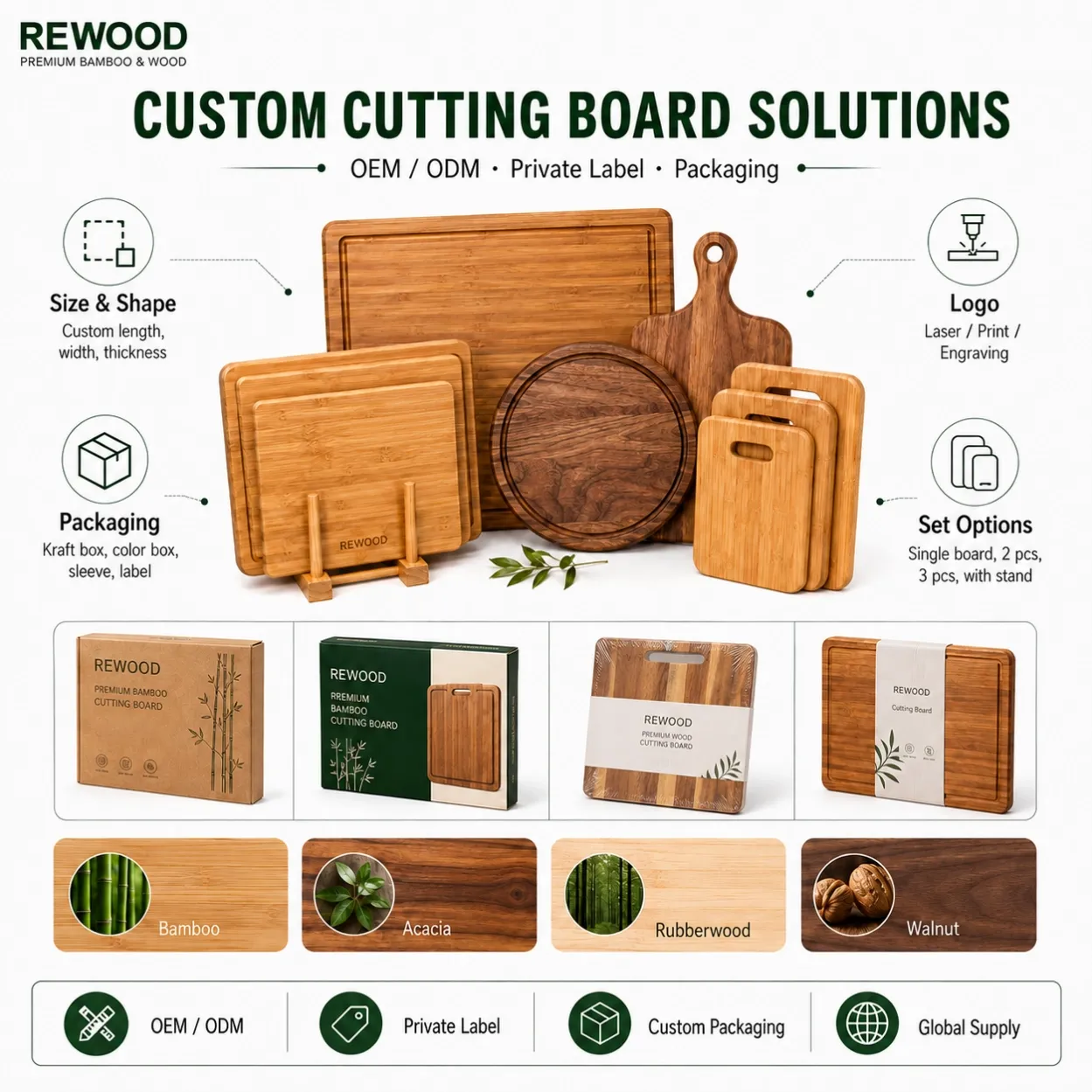
Private-label packaging can be developed according to the product, sales channel and first-order strategy.
For an e-commerce product, protection during delivery may matter more than a complex display structure.
For retail, shelf presentation may matter more.
For a premium gift product, packaging can become part of the product value.
First-time buyers should therefore avoid choosing packaging only because it looks expensive.
Ask:
Does this packaging fit my product, sales channel, retail price and shipping method?
10. Think About Landed Cost, Not Only the Factory Unit Price
A common first-time sourcing mistake is focusing only on the EXW or FOB product price.
The actual commercial decision should consider a broader cost structure.
Depending on the project, landed cost may include:
Product Cost
+
Packaging
+
Custom Branding
+
Inspection or Testing if Required
+
Freight
+
Import Costs
+
Warehouse / Fulfillment Costs
This does not mean every supplier must calculate every cost for you.
But the buyer should understand that the cheapest product quotation does not automatically create the best retail margin.
For example, a product that is slightly cheaper but requires a much larger carton may cost more to ship.
A more expensive package may also reduce profitability without improving customer conversion.
For a first launch, cost decisions should support the complete business model.
11. Start With a Market-Test Order, but Think About Reorders
The first order has a different purpose from a mature repeat order.
A first order helps the buyer learn:
- Does the product sell?
- Is the price accepted by customers?
- Does the packaging work?
- Are there product complaints?
- Are customers asking for another size or color?
- Are there delivery damages?
- Which variant sells best?
- How quickly should the next order be placed?
The first order should therefore generate information for the second order.
A useful mindset is:
First Order = Validate
Repeat Order = Improve and Scale
When a product performs well, repeat orders can then be optimized based on actual sales experience.
This may include:
- Quantity
- Packaging
- Product variants
- Carton configuration
- Shipping method
- Additional SKUs
A strong supplier relationship should become more efficient as both sides gain experience with the product.
12. Do Not Wait Until You Are Out of Stock to Plan the Reorder
New buyers sometimes focus so much on launching the first order that they do not think about the second order until inventory is almost finished.
That can create unnecessary pressure.
A reorder timeline may need to account for:
- Production
- Packaging preparation
- Inspection
- Export preparation
- International freight
- Customs
- Warehouse receiving
The exact timing depends on the product and shipping route.
Once the first sales data becomes available, start estimating:
- Average weekly sales
- Remaining stock
- Production lead time
- Shipping time
- Safety stock
This becomes especially important before seasonal sales periods.
13. Understand the Difference Between OEM and ODM
These terms are sometimes used loosely, but the distinction can help a new buyer communicate more clearly.
OEM
Usually refers to producing a product according to an existing specification or product direction, often with the buyer’s branding or customization.
ODM
Usually involves more product-development support, particularly when the buyer has an idea but does not yet have a complete manufacturing-ready product.
A project does not need to fit perfectly into one label.
What matters is understanding how much development work is required.
Rewood supports different levels of OEM, ODM and private-label development depending on the product and project requirements.
14. What Information Should a First-Time Buyer Send to Rewood?
You do not need to send a twenty-page sourcing document for the first inquiry.
A practical starting point is:
Information | What You Can Send |
|---|---|
Product | Photo, link, sketch or product name |
Quantity | Estimated first-order quantity |
Market | Country or region |
Sales Channel | Amazon, Shopify, independent site, retail, distribution |
Material | Bamboo, wood, unsure |
Logo | Yes / No |
Packaging | Kraft box, color box, mail-order box, unsure |
Target Positioning | Entry-level, mid-market, premium |
Destination | Country, warehouse or city if known |
Timeline | Planned launch period |
If you already know more, include it.
If you know less, explain what has not yet been decided.
For a more detailed RFQ checklist, see our guide to requesting a quote for custom bamboo and wood houseware.
15. What If You Do Not Know All the Answers Yet?
This is one of the most important points for first-time buyers:
You do not need to know everything before contacting a supplier.
There is a difference between:
Information that must be decided before quotation
and
Information that can be developed during sampling.
For example, you may already know:
- The product category
- Target market
- Estimated quantity
- Desired retail position
but still be unsure about:
- Exact dimensions
- Bamboo versus wood
- Packaging type
- Logo process
- Carton configuration
That is acceptable for an initial discussion.
A productive first message can simply say:
“This is our product direction. These are the details we know. These are the areas where we need your recommendation.”
That gives the supplier a much clearer basis for helping you.
16. Common Mistakes First-Time Private-Label Buyers Should Avoid
Asking Only for the Lowest Price
Price matters, but it should be evaluated together with material, specification, packaging and order requirements.
Designing Packaging Before Confirming the Product
If product dimensions change, the packaging may need to change as well.
Confirm the physical product first.
Skipping the Sample
Photographs cannot fully show dimensions, finish, physical feel or packaging fit.
Ordering Too Many Variants at the Beginning
More colors, sizes and SKUs can create more inventory complexity.
A focused first launch is often easier to evaluate.
Ignoring Freight Until the End
Packaging dimensions can materially affect shipping cost.
Assuming Every Certificate Applies to Every Product
Compliance and testing requirements should be evaluated according to the material, product and target market.
Changing the Specification After Production Starts
Late changes can create cost, timing and consistency problems.
The approved version should be clearly controlled before mass production.
17. How Rewood Supports Growth-Stage Buyers
Rewood works not only with established importers and distributors, but also with buyers who are building their first serious homeware product program.
Depending on the project, support may include:
- Product-direction review
- Material discussion
- OEM/ODM development
- Sample development
- Logo customization
- Private-label packaging
- Barcode and label coordination
- Production follow-up
- Quality-control coordination
- Export-carton preparation
- Pallet supply when required
- Palletizing and shipment preparation
- Export and delivery coordination
The objective is not to make a first-time buyer learn every factory term before starting.
The objective is to turn a product idea into a clearer, manufacturable and commercially practical project step by step.
A Simple First-Order Roadmap
For a new buyer, the complete process can be simplified into seven stages:
Stage 1 — Product Direction
Choose the product and define the intended customer.
Stage 2 — Initial RFQ
Send the reference, quantity, market and customization requirements.
Stage 3 — Product & Cost Review
Evaluate material, structure, MOQ, packaging and estimated cost.
Stage 4 — Sample
Produce and review the physical product.
Stage 5 — Final Approval
Confirm product, logo, packaging and other relevant specifications.
Stage 6 — Bulk Production
Manufacture according to the approved version and agreed order requirements.
Stage 7 — QC, Packaging & Shipment
Complete the agreed inspection, packaging and export preparation before dispatch.
You do not need to solve all seven stages on the first day.
You only need enough information to begin Stage 1 and Stage 2 correctly.
Frequently Asked Questions
Can I Start a Private-Label Houseware Brand Without Previous Importing Experience?
Yes. Previous importing experience is helpful but not required. A first-time buyer should begin with a clear product direction, realistic quantity, target market and willingness to complete sampling before mass production.
Do I Need a Technical Drawing Before Contacting a Manufacturer?
Not always. A reference photo, existing product, sketch or clear product concept may be enough for an initial evaluation. More detailed specifications can be developed when the project requires them.
What Is the Minimum Order Quantity for Private-Label Houseware?
MOQ depends on the product, construction, customization and packaging. Product MOQ and custom-packaging MOQ may also be different, so they should be confirmed separately for each project.
Should I Order a Sample Before Bulk Production?
For a new product or new supplier relationship, sample approval is strongly recommended. The sample helps confirm physical specifications, material, finish, logo and packaging before mass production.
Do I Need Custom Packaging for My First Order?
Not necessarily. The packaging level should match your sales channel, brand position, budget and order quantity. A simpler private-label solution can sometimes be more practical for an initial market test.
Can I Put My Logo on an Existing Product?
Yes, depending on the product and branding method. Existing products can often be developed into a private-label version with logo and packaging customization.
Can Rewood Help Me Develop a Completely New Product?
Yes. For projects requiring deeper structural development, Rewood can evaluate ODM development, prototypes, revisions and production feasibility according to the actual project requirements.
Which Is Better for My Product: Bamboo or Wood?
There is no universal best material. The right choice depends on product function, appearance, target market, price positioning and manufacturing requirements.
Should I Start With Many Products?
A new brand does not necessarily need a large number of SKUs at launch. A smaller, focused initial range can make it easier to evaluate sales, customer feedback and inventory before expanding.
What Should I Send for My First Quotation?
Send a product reference, estimated quantity, target market, sales channel, branding requirement, packaging preference and delivery destination. If some details are still uncertain, clearly identify them.
Ready to Turn a Product Idea Into a First Order?
You do not need a complete sourcing department or years of importing experience to begin evaluating a bamboo or wooden houseware project.
Start with what you already know:
- What product do you want to sell?
- Who is the customer?
- What quantity are you considering?
- What market are you targeting?
- Do you need a logo?
- How do you plan to sell the product?
- Where will the order be delivered?
From there, the product, sample, packaging and production requirements can be clarified step by step.
About the Author
Written by Jessie Jiang
Overseas Business Development, Rewood Houseware
Jessie works with new and established B2B buyers on bamboo and wood houseware sourcing, OEM/ODM product development, private-label packaging, sampling, order coordination and export projects.
Reviewed by the Rewood Product Development & Overseas Business Team
This guide is based on Rewood’s practical experience supporting private-label bamboo and wooden houseware projects from initial inquiry and sampling through bulk production, packaging and export preparation.
Last updated: August 17, 2026