
Aug 3, 2026Product Development & Case Studies
How Wooden Cutting Boards Are Made for Bulk Orders: Production Control and Quality Checks
Learn how wooden cutting boards are produced for bulk orders, including panel preparation, shaping, sanding, batch control, surface finishing and final inspection.
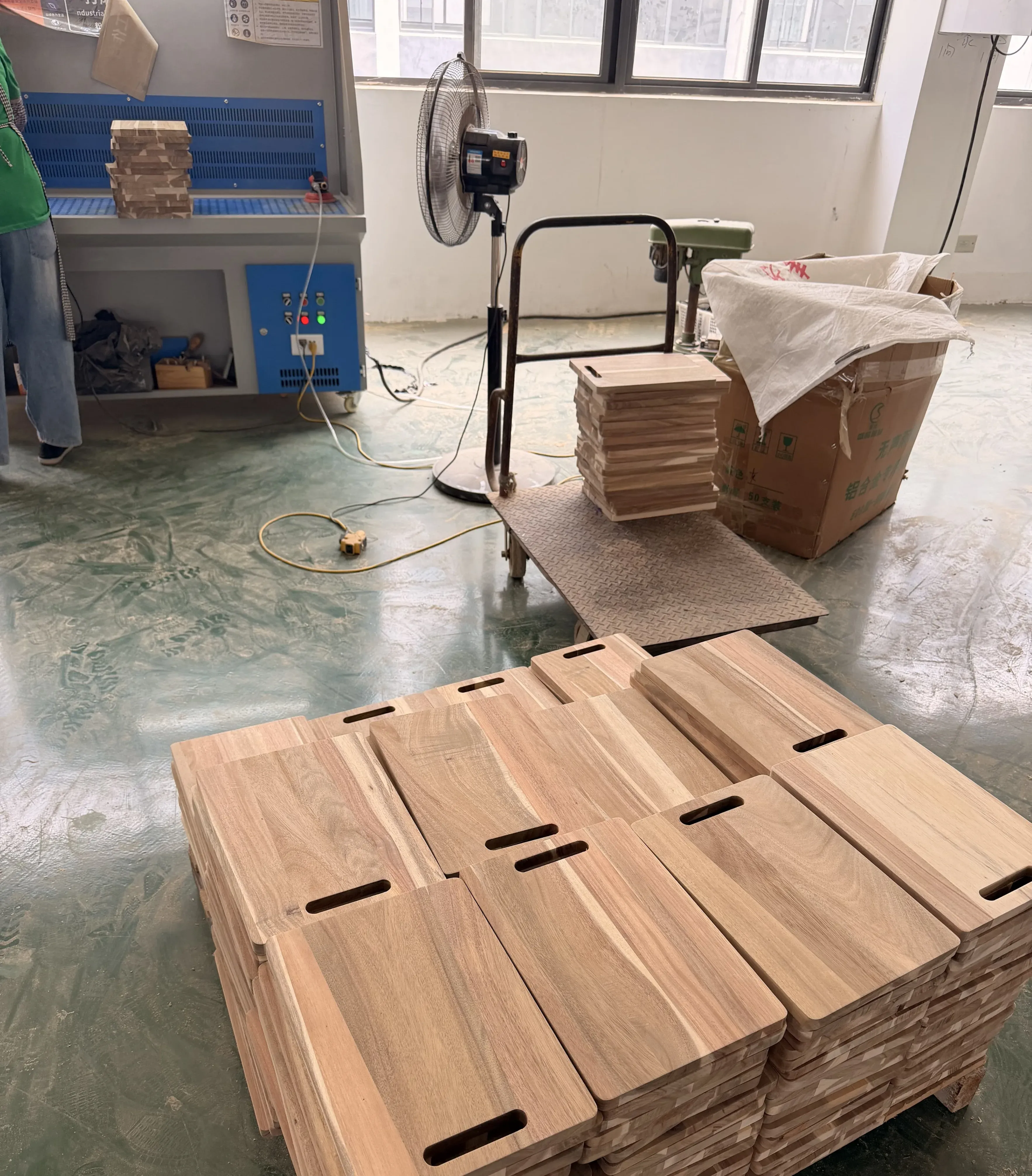
For importers, distributors and private-label kitchenware brands, evaluating a wooden cutting board supplier requires more than checking one attractive sample.
The real challenge is maintaining the approved dimensions, panel construction, handle position, edge profile, surface quality, natural appearance and packaging standard across an entire bulk order.
This article uses real workshop production images to explain the main stages involved in wooden cutting board manufacturing and the quality-control points professional buyers should confirm before placing an order.
Quick Answer: How Are Wooden Cutting Boards Produced for Bulk Orders?
A wooden cutting board bulk order normally moves through several controlled stages:
- Product specification and approved sample confirmation
- Material and wooden-panel inspection
- Cutting, shaping and dimensional processing
- Handle-slot, groove or functional-detail machining
- Edge sanding and surface preparation
- Moisture, flatness and workmanship checks
- Surface finishing and curing, where applicable
- Batch sorting and production identification
- Logo and packaging confirmation
- Final inspection before packing and shipment
The production sequence is important, but professional buyers should focus equally on how the supplier controls specifications, natural wood variation, critical dimensions and sample-to-bulk consistency.
Key Control Points for Importers
Production Area | What Buyers Should Confirm |
|---|---|
Material | Actual wood species, grade and panel construction |
Dimensions | Length, width, thickness and agreed tolerance |
Functional Details | Handle slot, hanging hole, juice groove or custom structure |
Edge Profile | Corner radius, bevel, smoothness and consistency |
Surface | Sanding quality, scratches, stains and rough areas |
Moisture and Flatness | Agreed inspection method and acceptance range |
Natural Appearance | Acceptable grain, knots and color variation |
Finish | Oil, coating or unfinished surface according to the project |
Logo | Method, position, size and approved appearance |
Packaging | Retail box, protective materials, labels and export carton |
Inspection | Internal checks, sampling standard or third-party inspection |
Repeat Orders | Retained specification, artwork and approved reference sample |
1. Start with a Controlled Product Specification
Bulk production should not begin from a reference photograph alone.
Before material preparation, the buyer and supplier should confirm a current product specification covering:
- Actual wood species;
- Panel construction;
- Product length, width and thickness;
- Dimensional tolerances;
- Handle-slot position and size;
- Corner radius or edge profile;
- Juice groove, hanging hole or other functional details;
- Surface finish and target appearance;
- Logo method, size and position;
- Packaging configuration;
- Barcode, label and carton-mark requirements;
- Inspection criteria;
- Target market and intended use.
A physical sample or pre-production sample should be connected to the same dated specification.
When a product is changed during sampling, the revision should be recorded clearly. Production and quality-control teams need to work from the latest approved version rather than from separate emails, photographs or chat messages.
Buyers preparing a new project can also review our guide on how to request a quote for custom bamboo and wood houseware.
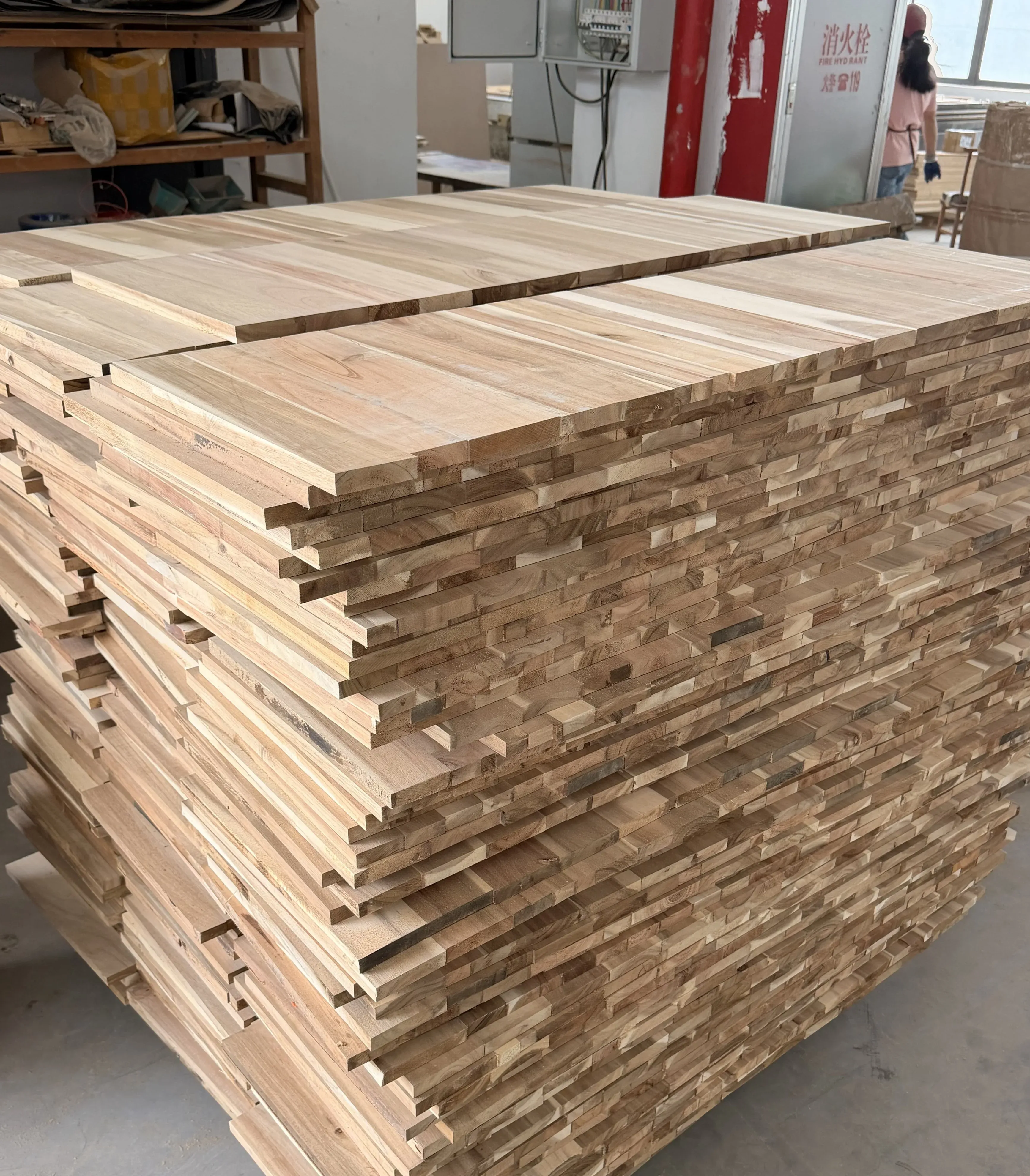
2. Panel Preparation and Material Inspection
The quality of a wooden cutting board begins with the condition and construction of the wooden panel.
Before shaping, the panels should be checked against the agreed product requirements. Depending on the material and construction, relevant inspection points may include:
- Correct wood species;
- Panel dimensions and thickness;
- Visible cracks or splits;
- Missing corners or damaged edges;
- Open joints or irregular glue lines;
- Excessive surface defects;
- Panel flatness;
- Material condition;
- Natural grain and color range.
Natural wood is not visually identical from one piece to another. However, this does not mean that every variation must be accepted.
The buyer and supplier should agree on which natural characteristics are acceptable and which defects should be rejected or separated before further processing.
For projects where material selection is still being evaluated, our comparison of bamboo, acacia and beech wood for B2B houseware buyers explains how appearance, positioning and application differ between common materials.
3. Cutting, Shaping and Dimensional Accuracy
After material preparation, the panels are processed according to the approved product shape.
This stage may include:
- Cutting the external dimensions;
- Forming the rectangular or custom outline;
- Producing the handle slot;
- Creating hanging holes;
- Machining juice grooves;
- Rounding corners;
- Creating bevels or edge profiles;
- Preparing matching sizes for sets.
For a professional buyer, the most important question is not simply whether the factory has the required machine.
The supplier must also control the position, depth and consistency of every critical feature.
For example, a handle slot that is slightly misplaced may affect:
- Product appearance;
- Carrying comfort;
- Hanging function;
- Logo position;
- Packaging fit;
- Visual consistency across the order.
Dimensions and functional details should therefore be checked during production rather than only after the entire quantity has been completed.
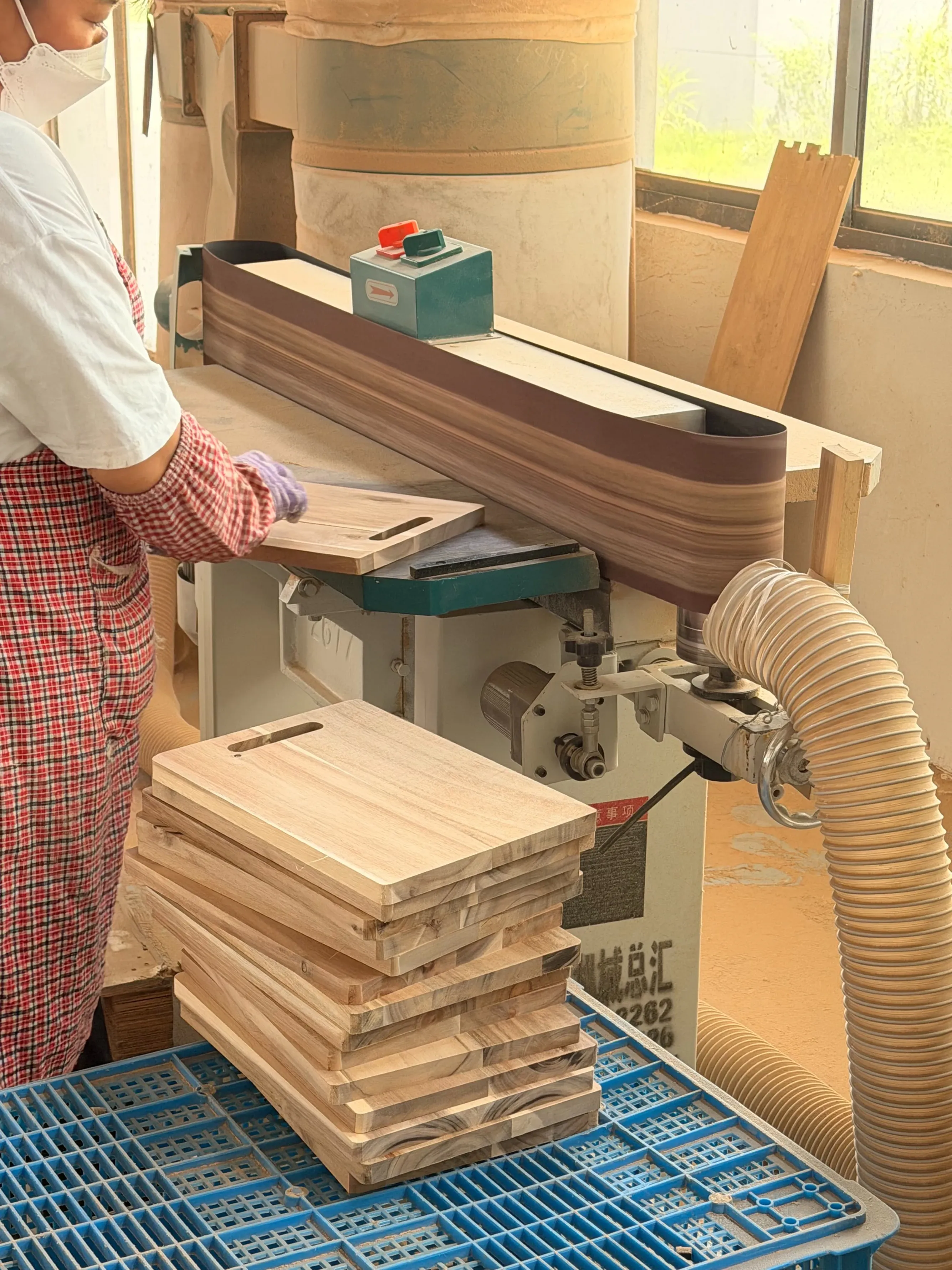
4. Edge Sanding and Surface Preparation
Machining creates the product shape, but sanding determines much of the customer’s first impression of workmanship.
The production team should pay particular attention to:
- Outer edges;
- Rounded corners;
- Handle-slot edges;
- Groove edges;
- End grain;
- Surface transitions;
- Areas around drilled or machined features.
The purpose of sanding is not only to make the board look smooth.
It should also remove sharp edges, machining marks, loose fibers and rough areas that could be noticed during normal use.
For bulk orders, the edge profile should remain reasonably consistent across the production batch. If one board has strongly rounded edges while another has nearly square edges, the products may appear to come from different specifications.
Manual handling and visual checking remain important because machines alone may not identify every rough area, edge inconsistency or local surface defect.
5. Surface Finishing and Product Appearance
The surface-finish requirement should be confirmed before quotation and production.
Depending on the product design and target market, a wooden cutting board may require:
- A natural unfinished appearance;
- Food-grade oil where specified;
- A protective surface treatment;
- A custom color or stain;
- Additional polishing;
- Specific care instructions.
The exact finishing system must match the product’s material, intended use and market requirements.
Importers should confirm:
- Which finish is being used;
- Whether it changes the natural color;
- Whether the finish is evenly applied;
- Whether sufficient drying or curing time is allowed;
- Whether the product has an unacceptable odor or oily residue;
- Whether product-specific testing is required.
A supplier should not use a general statement such as “food safe” without connecting the claim to the actual material, finish, adhesive, test requirement and intended application.
6. Moisture, Flatness and Stability Control
Moisture management is one of the important considerations in wooden cutting board production, but there is no single universal number suitable for every project.
The appropriate target or acceptance range may depend on:
- Actual wood species;
- Panel construction;
- Product thickness;
- Production season;
- Workshop and storage conditions;
- Destination climate;
- Intended use;
- Buyer specification.
A moisture reading should therefore be considered together with:
- Panel flatness;
- Visible cracking;
- Joint condition;
- Storage method;
- Processing condition;
- Surface treatment;
- Packaging timing.
Boards showing obvious warping, unstable joints or cracks should be identified before they move into logo application and retail packaging.
Importers should ask how and when moisture and flatness are checked, rather than relying only on one isolated measurement.
7. Managing Natural Grain and Color Variation
Wooden cutting boards are made from a natural material, so every board may display a different combination of grain and color.
Professional quality control should not attempt to make natural wood look artificially identical. Instead, it should establish a practical and agreed visual range.
Buyers should confirm:
- Acceptable light and dark color variation;
- Acceptable grain patterns;
- Whether small natural knots are allowed;
- Whether mineral streaks or darker sections are acceptable;
- How highly contrasting panels are handled;
- Whether products in the same retail set should be visually coordinated.
For individual cutting boards, a broader natural range may be acceptable.
For two-piece or three-piece sets, buyers may prefer the boards within each set to have a more coordinated appearance.
The acceptable visual standard should be confirmed during sampling so that it does not become a subjective disagreement after mass production.
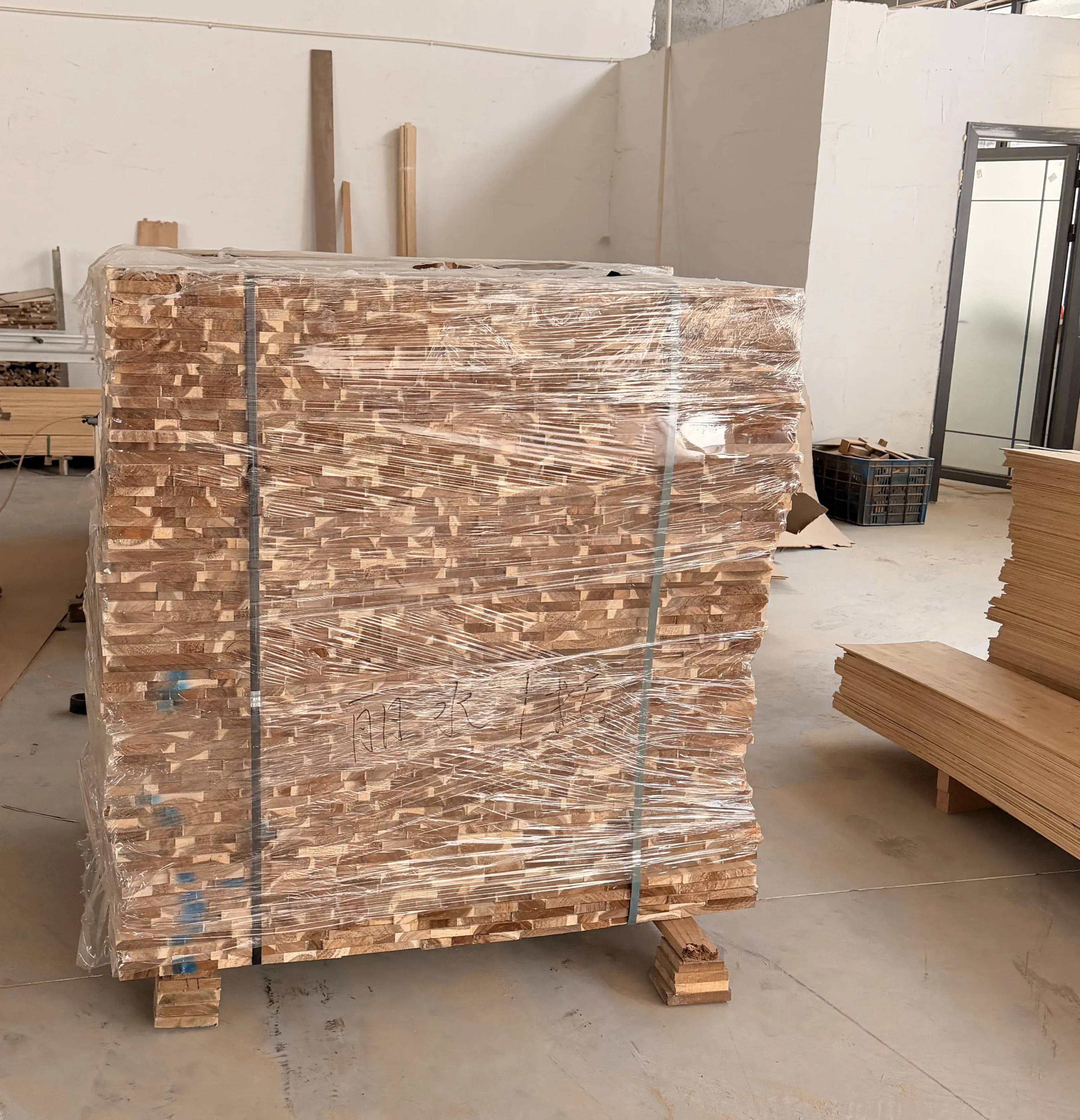
8. Batch Identification and Production Control
A bulk order may contain:
- Different board sizes;
- Different handle designs;
- Several logo versions;
- Multiple packaging artworks;
- Different customer SKUs;
- Different destination markets.
Products and panels should therefore be grouped and identified clearly during production.
Batch control helps reduce the risk of:
- Mixing different dimensions;
- Using the wrong logo;
- Applying the wrong packaging;
- Combining different customer orders;
- Losing track of reworked products;
- Shipping an incorrect quantity.
Useful batch information may include:
- Customer or project reference;
- Product code;
- Size;
- Quantity;
- Material;
- Processing stage;
- Logo version;
- Packaging version;
- Inspection status.
Protective wrapping or grouped workshop handling may be used during certain stages, but this should not be confused with the final export-packaging standard.
9. In-Process Quality Checks
Waiting until the entire order is finished can make quality problems more difficult and expensive to correct.
A practical production-control plan may include checks at several stages.
After Panel Preparation
Check material, visible defects, panel integrity, thickness and flatness.
After Machining
Check external dimensions, handle-slot position, groove details, corner shape and structural consistency.
After Sanding
Check the surface, outer edges, handle area, corners and remaining rough spots.
After Finishing
Check color, finish consistency, drying condition, stains, residue and surface appearance.
After Logo Application
Check logo method, size, position, clarity and consistency.
Before Packaging
Check product identity, quantity, labels, inserts, packaging protection and carton information.
The exact inspection frequency should be based on the order size, product risk and buyer requirements.
Depending on the project, quality control may include:
- Internal process inspection;
- Defined sampling;
- Critical-feature checking;
- Selected 100% inspection items;
- AQL inspection;
- Third-party pre-shipment inspection.
These requirements should be agreed before production because different inspection levels may affect cost and lead time.
10. Final Inspection Before Packaging
Before packing, finished cutting boards should be checked against the approved sample and specification.
Common final inspection points include:
- Correct product and material;
- Length, width and thickness;
- Handle-slot position;
- Corner and edge profile;
- Flatness;
- Cracks, splits or open joints;
- Rough surfaces;
- Scratches or stains;
- Finish consistency;
- Logo appearance;
- Natural color range;
- Correct quantity;
- Packaging and labeling.
For private-label orders, the packaging check is just as important as the product check.
A correct cutting board packed in the wrong color box, with the wrong barcode or with another SKU’s instruction card can still create a serious retail problem.
11. Packaging for Retail and Export
Packaging should be designed around product protection, sales channel and shipping efficiency.
Buyers should confirm:
- Individual protective material;
- Retail box or kraft box structure;
- Product orientation inside the box;
- Insert cards and care instructions;
- Barcode and retail labels;
- Gift packaging requirements;
- Quantity per export carton;
- Carton dimensions;
- Net and gross weight;
- Carton marks;
- Mail-order or drop-test requirements where applicable.
Wood products should not be packed before the relevant finishing and drying conditions are suitable.
Packaging that traps excessive moisture, allows movement or provides insufficient edge protection may increase the risk of surface marks, carton damage or product complaints.
Packaging dimensions should also be reviewed early because unnecessary empty space can increase freight cost across a bulk order.
What Should Importers Confirm Before Ordering?
Before requesting a final quotation, professional buyers should provide or confirm:
- Product photo, drawing or current sample;
- Actual wood species;
- Product dimensions;
- Thickness;
- Panel construction;
- Handle, groove or edge requirements;
- Surface finish;
- Logo artwork;
- Packaging style;
- Estimated order quantity;
- Target market;
- Required testing or documentation;
- Inspection standard;
- Delivery destination;
- Required timeline.
A quotation can only be compared accurately when every supplier is pricing the same specification and commercial requirements.
How Rewood Supports Wooden Cutting Board Projects
Rewood supports importers, distributors, wholesalers, retailers and private-label brands with bamboo and wooden kitchenware projects.
Our project support may include:
- Product-specification review;
- Material and structure evaluation;
- Custom size and shape development;
- Handle-slot and groove customization;
- Sample development;
- Logo application;
- Private-label packaging;
- Barcode, label and insert-card coordination;
- Production tracking;
- Pre-shipment quality checks;
- Export and delivery preparation.
For each project, the final production plan, inspection method, documentation, MOQ and lead time are confirmed according to the specific product, quantity, finish, packaging and destination-market requirements.
Buyers can review an example of our custom acacia wood cutting board with handle or explore our wider bamboo and wooden kitchenware product range.
Already Selling Wooden Cutting Boards?
Send us your current:
- Product specification;
- Sample or product link;
- Target material;
- Required sizes;
- Order quantity;
- Logo artwork;
- Packaging files;
- Target market;
- Delivery schedule.
Our team can review the product structure, production requirements, packaging details and potential quality-control points before preparing a quotation.
Frequently Asked Questions
What are the most important quality checks for a wooden cutting board?
Important checks include the actual wood species, panel construction, dimensions, thickness, flatness, joints, handle or groove accuracy, edge smoothness, surface quality, finish, logo and packaging.
The final inspection criteria should be confirmed against an approved sample and dated specification.
Why can wooden cutting boards warp or crack?
Warping or cracking may be influenced by material condition, panel construction, moisture differences, storage environment, processing, finishing, packaging, transport conditions and end-user care.
Quality control should therefore evaluate the complete production and handling process rather than relying on one moisture measurement alone.
Should every wooden cutting board have exactly the same grain and color?
No. Natural grain and color variation are expected in wooden products.
The buyer and supplier should agree on an acceptable visual range. Strongly contrasting or unacceptable pieces can then be identified according to the approved standard.
Can the handle slot, dimensions and edge profile be customized?
Yes. Wooden cutting boards can be developed with custom dimensions, thicknesses, handle slots, hanging holes, juice grooves, corner radii and edge profiles, subject to material and production feasibility.
The required details should be confirmed through drawings, specifications and sample approval.
How can importers verify quality before shipment?
Importers can use an approved reference sample, a dated product specification, production photographs, internal inspection records, defined sampling, AQL inspection or third-party pre-shipment inspection.
The appropriate method depends on the order size, product risk and buyer requirements.
Can Rewood support custom logo and private-label packaging?
Yes. Rewood supports logo application and private-label packaging options such as laser engraving, printing, labels, color boxes, kraft boxes, insert cards, barcodes and export-carton marks.
Final options and MOQ depend on the product, logo method and packaging structure.
Can FSC or food-contact documentation be provided?
Documentation must be confirmed according to the actual material, supply chain, manufacturing entity, customized product and target market.
Buyers should provide their specific compliance requirements before quotation so that the applicable documents, material sourcing or product testing can be evaluated correctly.
About the Author
Written by Jessie Jiang
Overseas Business Development, Rewood Houseware
Jessie works with importers, distributors, retailers and private-label brands on bamboo and wood houseware manufacturing, product development, material selection, custom packaging, quality coordination and export projects.
Reviewed by the Rewood Product Development & Quality Control Team
This article is based on Rewood’s practical experience supporting wooden and bamboo houseware sampling, bulk production, private-label packaging, quality inspection and export projects.
Last updated: August 3, 2026